
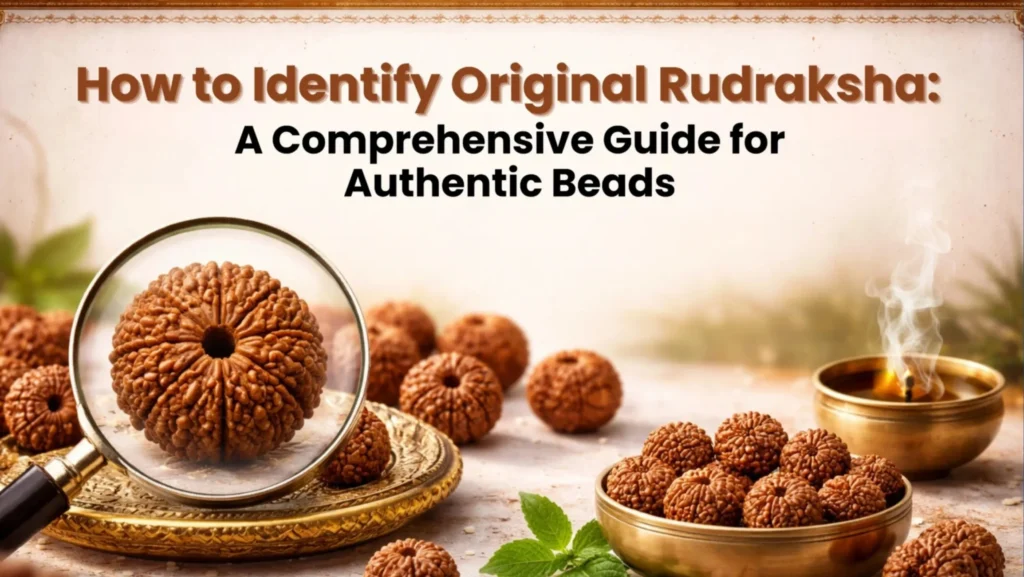
Buying Rudraksha is often a meaningful decision, whether you’re a customer purchasing for personal use, an astrologer recommending beads, or an e-commerce buyer comparing options online. But the biggest challenge in India is simple: fake Rudraksha beads are extremely common, and many look convincing at first glance.
To identify original Rudraksha, check for natural mukhi lines (not carved), an organic rough texture (not plastic-smooth), realistic shape variation, and a natural-looking hole. Avoid relying on viral tests like water-floating. For expensive or rare beads, choose certified Rudraksha verified through professional methods like magnification and X-ray/CT.
Whether you want to buy genuine Rudraksha for personal use or astrological guidance, knowing how to verify authenticity is the first step toward a confident purchase.
This guide explains original Rudraksha vs fake, practical home checks, what tests are myths, how certification works, and how to buy safely in India.
Why Rudraksha Authenticity Matters Before You Buy
Rudraksha authenticity matters for one big reason: you’re paying for a natural bead with specific features (like mukhi count and origin). Fake beads often have carved lines, artificial polish, or even moulded resin, which means:
- You may receive the wrong Mukhi
- The bead may be of poor quality and crack faster
- You may spend a high amount on something that isn’t genuine
- You may struggle with resale or exchange later if there’s no proof of authenticity
For astrologers and practitioners, authenticity matters even more because recommendations depend on correct identification. For e-commerce buyers, authenticity reduces returns, disputes, and negative reviews.
An original Rudraksha has naturally formed mukhi lines, organic texture, and a believable structure, while fake beads often show artificial carving, uniform grooves, and unnatural shine.
Understanding Rudraksha: A Guide to Mukhi Type, Meanings and Essential Terms.
Before you learn how to check authenticity, you should understand a few basic terms. It will help you read product listings and certificates confidently.
What is “Mukhi” in Rudraksha?
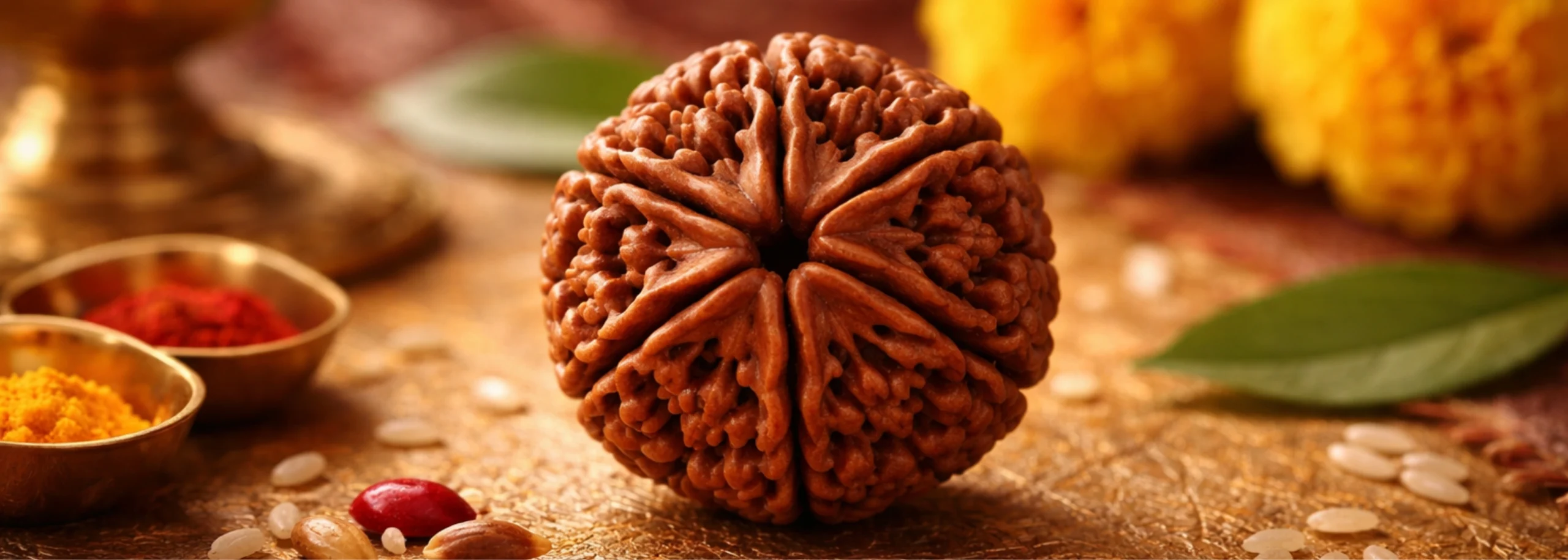
Mukhi refers to the number of natural lines (grooves) running from the top to the bottom of the bead. For example, a 5 Mukhi Rudraksha typically has five natural segments/lines.
Nepal vs Indonesia Rudraksha:
Many Rudraksha beads sold in India are sourced from:
- Nepal: generally larger size, deeper mukhi lines, more rugged texture
- Indonesia: often smaller, finer lines, more uniform appearance
Key bead parts you should inspect:
- Mukhi lines (grooves)
- Crown/top and bottom
- Bead hole (drilling/formation)
- Surface texture
- Overall shape
Original vs Fake Rudraksha: Visual Checks You Can Do at Home
Most buyers can avoid fakes with simple, careful observation. Use daylight and, if possible, a magnifying glass.
1) Check Natural Mukhi Lines
| Original Rudraksha | Fake Rudraksha (common signs) |
| lines look naturally formed, not “cut.” | Lines look too sharp or overly clean |
| The depth varies slightly across the bead | perfect symmetry and identical spacing |
| Lines usually continue from top to bottom | carved grooves that appear “etched.” |
| Not all lines are equally straight or equally deep | shallow lines that don’t continue naturally |
Tip: If you’re comparing original Rudraksha vs fake, focus on whether mukhi lines look organic rather than “machine-made.”
2) Feel and Observe the Surface Texture
Original Rudraksha usually has a natural roughness, tiny pores, and an organic feel.
Fake beads can look: extra smooth like plastic coated, extra glossy, and coated with wax.
3) Don’t Fall for the “perfect Symmetry” Myth
Many people think a perfect-looking bead is the best. In reality, nature rarely produces perfectly identical shapes. Some variation is normal.
4) Inspect the Bead Hole Closely
- A natural hole may look slightly uneven inside
- A fake bead may have a hole that looks too clean, sharp, and perfectly drilled, especially if the bead itself looks artificial.
5) Look for Paint, Coating, or Unnatural Shine
If the bead looks polished like a plastic ornament, be cautious. Some sellers apply a coating to make a bead look “premium.”
Simple Authenticity Tests: What Works, What’s a Myth
A lot of Rudraksha “tests” go viral online. Some are misleading and can cause you to reject a genuine bead or damage it.
Water Float Test (Myth for Authenticity)
Many people believe original Rudraksha always sinks, and fake always floats. This is not reliable because density varies based on:
- bead type, size, dryness, age
- internal compartments
- natural differences between Nepal/Indonesia varieties
Copper Coin test/magnet Test
These tests don’t prove authenticity. Rudraksha is not supposed to behave like metal. Such tests are not dependable for determining genuine Rudraksha.
Needle/heating Tests
Avoid burning, heating, or poking aggressively. It can damage the bead, and still doesn’t confirm authenticity.
Professional verification is strongly recommended when you’re buying special beads like Gauri Shankar, Ganesh, and Trijuti. Also, high Mukhi beads are rare and expensive, like 1 Mukhi, 14 Mukhi, and 21 Mukhi. Rare beads like 1 Mukhi Rudraksha command high prices precisely because of their scarcity, making certified verification non-negotiable before purchase.
Bought a Rudraksha and Want It Verified by Experts?
Bring your bead to Ratna Kendra, Lucknow. Our specialists will assess it for you — no appointment needed. Walk in any day between Monday to Saturday, 10:30 AM to 7:30 PM.
How Professionals Verify Rudraksha (Certification, Lab Tests, X-Ray)
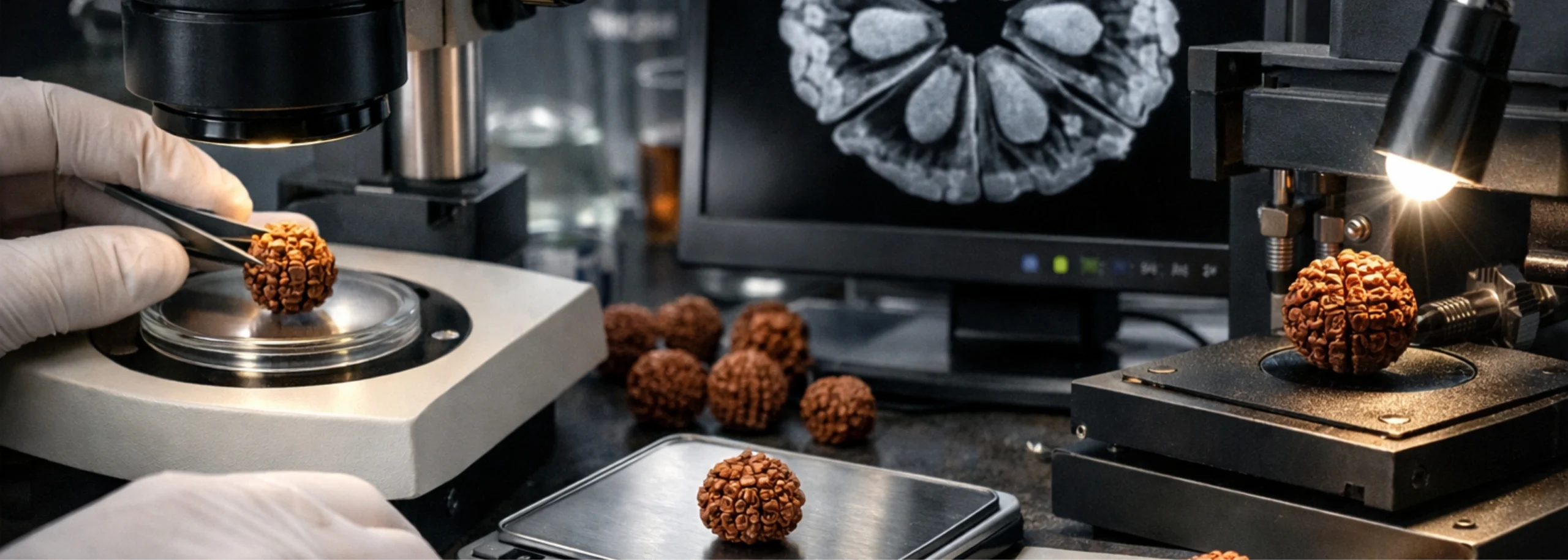
Professionals always prefer to conduct a Lab test, X-Ray test, or, for commercial intent (buying with confidence), certification is your best protection, especially for higher-value beads.
What a good Rudraksha certificate typically includes:
- Mukhi count confirmation
- bead dimensions (size) and weight
- clear photos of the same bead
- identification number/QR (if available)
- lab/issuer details (who issued it, where)
X-ray/CT scan verification (high-trust method):
Professionals may use X-ray/CT scans to check:
- internal seed compartments
- Whether Mukhi lines are natural or artificially created
- internal structure consistency
Microscopic inspection
Under magnification, a trained verifier can identify:
- natural line structure vs carved grooves
- surface patterns typical of genuine Rudraksha
For professional Rudraksha verification in Lucknow, visit Ratna Kendra at Chowk Sarrafa market — our experts verify beads using magnification, X-ray imaging, and over 50 years of hands-on experience.
How to Check Mukhi Count Correctly (Step-by-Step)
Mukhi count is one of the most important buyer questions. Here’s a simple method:
Step 1: Use bright light + magnification: Natural lines can be subtle. Use sunlight or a strong white light.
Step 2: Identify lines running top to bottom: Mukhi lines are long grooves—don’t count random scratches or cracks.
Step 3: Count continuously around the bead: Rotate slowly and count each distinct segment once.
Step 4: Beware of superficial cracks: Cracks can appear like Mukhi lines, but are usually irregular and don’t align naturally.
Special bead types (quick mention):
- Gauri Shankar: appears as two naturally joined beads
- Ganesh has a trunk-like protrusion
- Trijuti: three naturally joined beads.
These should be verified carefully and ideally with certification for higher prices.
Post-Purchase Authenticity Checklist
Ensuring the authenticity of rudraksha is important before purchasing it, as is post-purchase authenticity, because it minimises the chances of fraud committed by sellers. In many cases, sellers show the authentic product while selling the rudraksha, but end up delivering a duplicate one to the customer to avail maximum profit. Though the chance of these frauds is less, still, precautionary measures are a must to be on the safer side.
Post-purchase Authenticity Checklist
- match bead photos/video from product page
- Verify Mukhi count again under the light
- confirm size/weight from certificate (if provided)
- Verify certificate ID/QR (if available)
- Keep the invoice, certificate, and packaging
Conclusion
If you want a genuine bead, focus on what truly matters: natural mukhi lines, organic texture, realistic structure, and seller transparency. Don’t rely on viral “float tests.” For higher-value beads, choose certified Rudraksha verified through professional inspection or imaging methods.
The same principles of authenticity apply across all sacred and astrological products — from Rudraksha beads to lab-certified natural gemstones, always prioritise verified sourcing over price alone.
Frequently Asked Questions
1) How can I identify an original Rudraksha at home?
Check natural mukhi lines (not carved), organic rough texture, and a natural-looking hole. Use good lighting and a magnifying glass. Compare the bead with clear product photos/videos. For expensive beads, certification is highly recommended.
2) Is the water float test accurate for checking genuine Rudraksha?
No. The water float test is not reliable because bead density varies by size, dryness, origin, and internal structure. Some genuine beads may float, and some fake beads may sink. Don’t use the float test as the final proof.
3) How do I check the mukhi count correctly?
Use a strong light and rotate the bead slowly while counting the deep grooves that run from top to bottom. Don’t count surface scratches. If the bead is rare or costly, verify with a certificate or professional testing.
4) What should a Rudraksha authenticity certificate include?
A good certificate should include the bead’s mukhi count, clear bead photos, dimensions/weight, a unique identification number/QR (if possible), and details of the issuing lab/authority. Avoid generic certificates without traceability.
5) Which is better: Nepal or Indonesia Rudraksha?
Both can be genuine. Nepal Rudraksha is often larger with deeper lines, while Indonesia Rudraksha is usually smaller with finer lines. Choose based on preference, comfort, and authenticity—not only origin.
6) How can I avoid buying fake Rudraksha online in India?
Buy from sellers with clear videos, close-up images, return policies, transparent pricing, and bead-specific certification for high-value purchases. Avoid deals that seem too cheap and listings with unclear bead details.